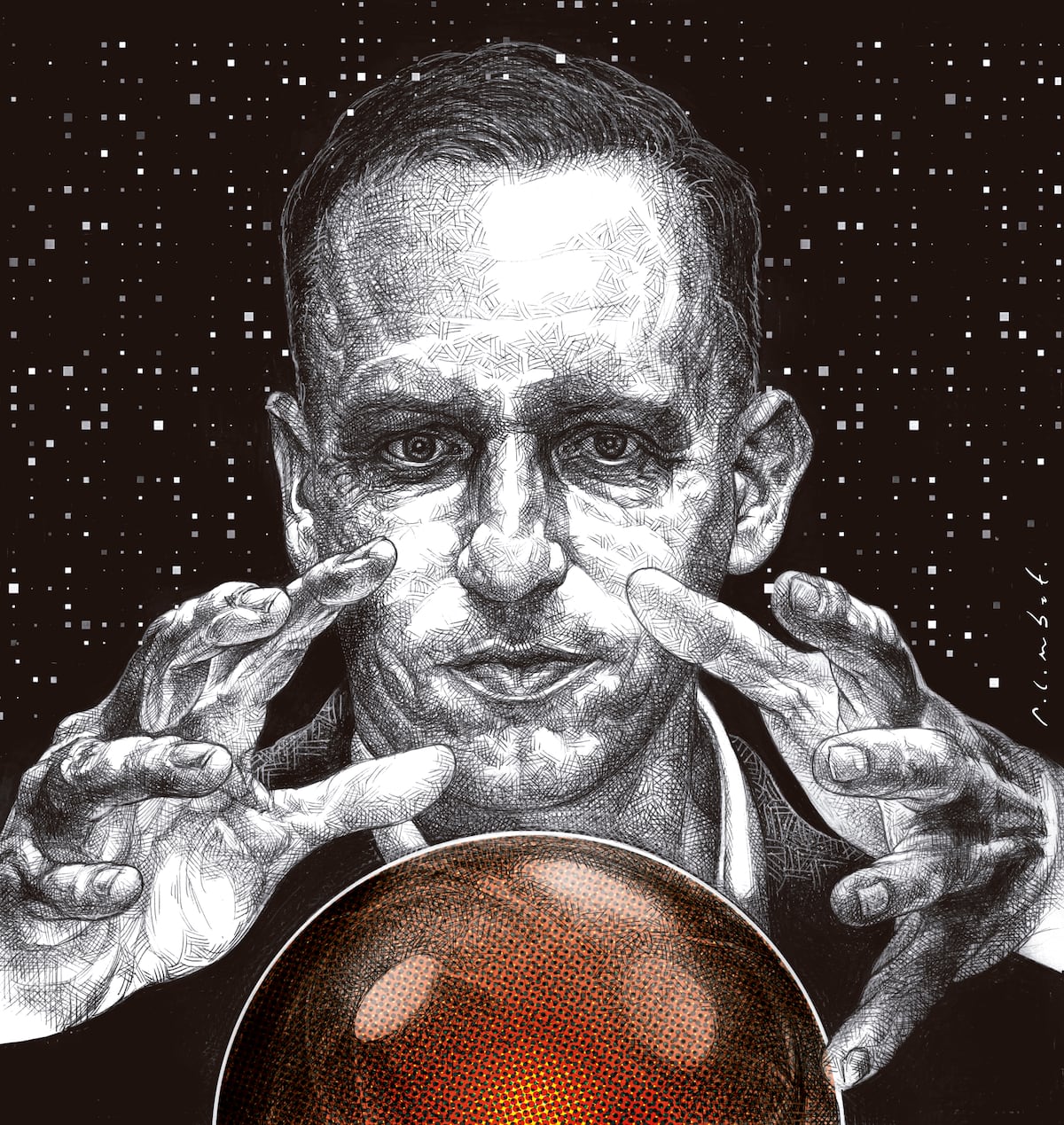
Over the past three decades, Peter Thiel has evolved from a foundational figure in electronic payments to one of the most polarizing and influential architects of modern technology and right-wing politics. Co-founding PayPal and providing early backing to Facebook, Thiel parneled his financial success into a vast network of venture capital and high-security enterprises, most notably Palantir. Yet, beyond his business ventures, Thiel has increasingly used public platforms to merge libertarian ideology, anti-establishment nationalism, and esoteric religious rhetoric.
From PayPal to Palantir: The Rise of an Oligarch
Thiel’s footprint in Silicon Valley dates back to the late 1990s when he helped launch PayPal alongside Max Levchin and later Elon Musk. The company's early, aggressive approach to skirting traditional banking regulations set a template for the "move fast and break things" ethos that would come to dominate tech culture. Following PayPal's sale, Thiel founded Founders Fund and provided critical early capital to Mark Zuckerberg, helping shape Facebook's aggressive governance model.
However, Thiel's ambitions extended far beyond consumer software. In 2003, he co-founded Palantir, a data-mining firm built with initial backing from a CIA venture arm. Designed to process massive, complex datasets to identify patterns and security vulnerabilities, Palantir became deeply integrated into government surveillance and military apparatuses worldwide. This reliance on state contracts stands in sharp contrast to Thiel’s vocal libertarian hostility toward government regulation and public welfare systems.
Philosophical Roots and Political Influence
Thiel's worldview is heavily shaped by unconventional intellectual influences, including the philosophical work of René Girard on mimetic desire and scapegoating, alongside conservative political theorists like Carl Schmitt. These ideas have fueled his skepticism toward democracy, which he has argued is fundamentally incompatible with unbridled capitalist growth. Observers note that his ideology prioritizes the leadership of a technological elite over traditional democratic governance.
“For 30 years, he has preached against democracy and government, which he called ‘fundamentally evil,’ while investing in companies that provide surveillance to the government,” notes writer and journalist Gil Durán. This paradox defines much of Thiel's career: leveraging state backing and public contracts while championing an anti-statist ethos.
Religious Rhetoric and the Tech Elite
In recent years, Thiel has taken his critiques into the realm of theology, warning audiences about the "Antichrist" and framing political opposition to artificial intelligence regulation as an existential battle between good and evil. Critics argue that this framing serves a strategic purpose. As one observer remarked, “He doesn't believe in the antichrist... he just knows that fear is a tool, and his whole antichrist spiel is to use Christians as attack dogs for the oligarchy.”
Others view these apocalyptic warnings as symptoms of a broader ideological insularity among tech billionaires. Commentators reflecting on the cultural impact of these magnates have observed: “They have to believe that people advocating against abuse of technology are the heralds to the apocalypse... just to see themselves as anything other than what they are: another greedy villain who got rich off exploiting others.”
Whether scouting land in Patagonia to build autonomous jurisdictions or shaping the political careers of prominent U.S. leaders like Vice President J.D. Vance, Thiel continues to challenge the boundary between corporate power and state sovereignty. As artificial intelligence accelerates and the tech sector seeks greater deregulation, Thiel’s vision of a frictionless, elite-led future remains a powerful and polarizing force in global affairs.

